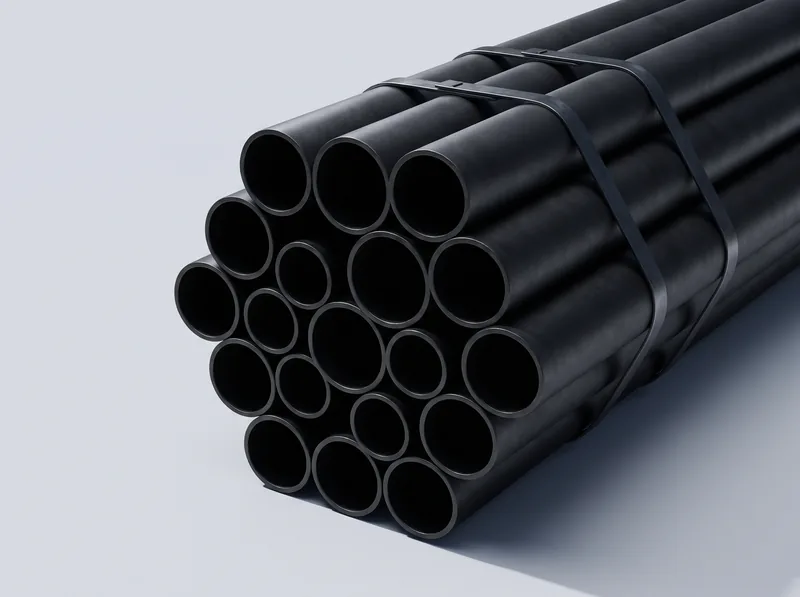
DN 15–100 · black and galvanized · GOST 3262
Water and gas pipe
Water and gas pipe to GOST 3262 for water, gas and heating. Nominal bore 15–100, light, standard, heavy
St3sp · Q235B · DN 15–100 · Ø57–219 · zinc 60–80 µm · GOST 3262 · GOST 10704
Welded and water-gas pipe with hot-dip galvanizing. Water supply, external networks, unpainted structures
Pick a size in the table: each row has a quantity field in tonnes and an “Add to specification” button. Rows from several items go out as one request.
The same formula as the table below: metres to tonnes and tonnes to metres.
Formula
| Size, mm | Weight, kg/m | Metres per tonne | Add to specification |
|---|---|---|---|
| 21.3×2.8 | Weight, kg/m1.28 | Metres per tonne782.8 | Add to specification |
| 26.8×2.8 | Weight, kg/m1.66 | Metres per tonne603.4 | Add to specification |
| 33.5×3.2 | Weight, kg/m2.39 | Metres per tonne418.2 | Add to specification |
| 42.3×3.2 | Weight, kg/m3.09 | Metres per tonne324.1 | Add to specification |
| 48×3.5 | Weight, kg/m3.84 | Metres per tonne260.3 | Add to specification |
| 60×3.5 | Weight, kg/m4.88 | Metres per tonne205.1 | Add to specification |
| 76×3.5 | Weight, kg/m6.26 | Metres per tonne159.8 | Add to specification |
| 89×3.5 | Weight, kg/m7.38 | Metres per tonne135.5 | Add to specification |
| 108×4 | Weight, kg/m10.3 | Metres per tonne97.5 | Add to specification |
| 159×4.5 | Weight, kg/m17.1 | Metres per tonne58.3 | Add to specification |
| 219×6 | Weight, kg/m31.5 | Metres per tonne31.7 | Add to specification |
Pipe mass per metre is 0.02466·(D − t)·t, where D is the outside diameter and t the wall in mm.
Theoretical weight at steel density 7.85 g/cm³. Actual batch weight is by scale and mill certificate.
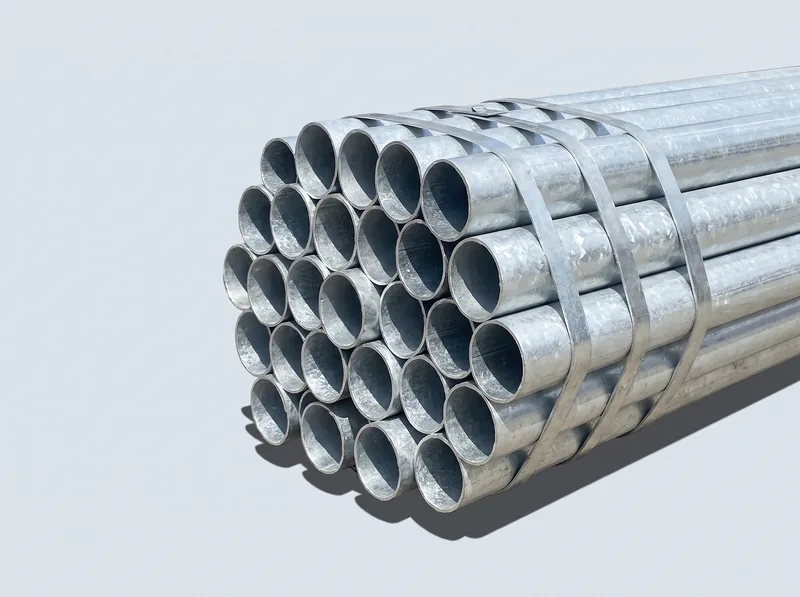
Galvanized pipe is black welded pipe that, after welding and cutting, has been hot-dip galvanized: the pipe is pickled, fluxed and immersed in molten zinc, and the layer forms both outside and inside. Small diameters go to GOST 3262-75 as galvanized water and gas pipe, medium diameters to the GOST 10704-91 size range with coating to GOST 9.307-89. At mills in China galvanized pipe is produced to GB/T 3091-2015, for export to ASTM A53/A53M in the hot-dipped galvanized version and EN 10255 with coating to EN 10240. Zinc protects the steel electrochemically: at a scratch down to the metal the coating corrodes, not the pipe, until the layer is used up.
The base steel grade is St2sp, St3sp or Q235B, as for black welded pipe; the difference is the coating. GOST 3262 requires a zinc layer of at least 30 µm; hot-dip galvanizing to GOST 9.307 gives a layer that depends on wall thickness and immersion time, and in the specification the bureau fixes a layer thickness of 60–80 µm as the agreed value, which the mill confirms by measurement. The weight of galvanized pipe exceeds the calculated weight of black pipe by the weight of zinc: under GOST 3262 it is taken as 3 % higher. Electro-galvanized pipe is a different product with a thin layer and is not taken for external networks; in the specification the galvanizing method is written in words: "hot-dip galvanizing".
During inspection at the mill, the zinc layer on galvanized pipe is measured with a magnetic thickness gauge at several points along the length and circumference of the sampled pipes; the coating is examined for bare areas, runs, white rust and zinc drops inside the pipe, and the cleanliness of the thread on threaded ends is checked. Outside diameter and wall thickness are measured with a micrometer and callipers at the pipe ends. The heat number in the marking is matched against the mill test certificate (MTC), which states grade, size, hydrostatic test and zinc layer thickness. The bundle tag and strapping are checked. Rejects recorded in the report are replaced; the replacement is supplied by the manufacturing mill under its contract with the bureau.
Bundles strapped with steel band over spacers so as not to damage the coating; threaded ends with protective caps; the bundle carries a mill tag with size, zinc thickness and heat number.
Equivalents are the nearest, not identical: the exact grade and standard are written into the contract.
| GOST | GB (China) | ASTM | EN | Note |
|---|---|---|---|---|
| Steel 20 | GB (China)20# | ASTMA106 Gr.B | ENP235GH | NoteSeamless pipes. Nearest equivalents by composition and strength; test requirements differ between the standards |
| Steel 45 | GB (China)45# | ASTM1045 (A519) | ENC45 | NoteSeamless pipes for machining, nearest equivalents. A519 is a standard for mechanical tubing; C45 under EN 10083 is a steel grade, tubes in it are made to EN 10297-1 |
| 09G2S | GB (China)Q355B | ASTMA572 Gr.50 | ENS355J2H | NoteLow-alloy steel, nearest equivalents. Before GB/T 1591-2018 the grade was designated Q345B; A572 is a standard for rolled products, not for pipe; S355J2H is a hollow section grade under EN 10219 |
| St3sp | GB (China)Q235B | ASTMA53 Gr.B | ENP235TR1 | NoteWelded pipes. A53 Gr.B is the nearest equivalent: its tensile strength is higher than that of Q235B |
| St3sp | GB (China)Q235B | ASTMA500 Gr.B | ENS235JRH | NoteHollow sections. A500 specifies a higher yield strength than Q235B; structural design uses the standard stated in the specification |
| St2sp, St3sp | GB (China)Q195, Q235 | ASTMA53 Gr.A | ENS195T | NoteWater and gas pipes. GOST 3262 does not specify mechanical properties, so the grade comparison is nominal |
| K42 (GOST 20295) | GB (China)L245 (GB/T 9711) | ASTMAPI 5L Gr.B | ENL245NB | NoteSpiral-welded pipes. A strength class by tensile strength, not a steel grade |
| 08Kh18N10 | GB (China)06Cr19Ni10 | ASTMTP304 | EN1.4301 | NoteStainless pipes. Austenitic 18-10 steel; 03Kh17N14M3 corresponds to TP316L and 1.4404 |
Equivalents are the closest match, not identical: chemistry and tolerances differ between standards. The exact grade and standard are written into the contract.
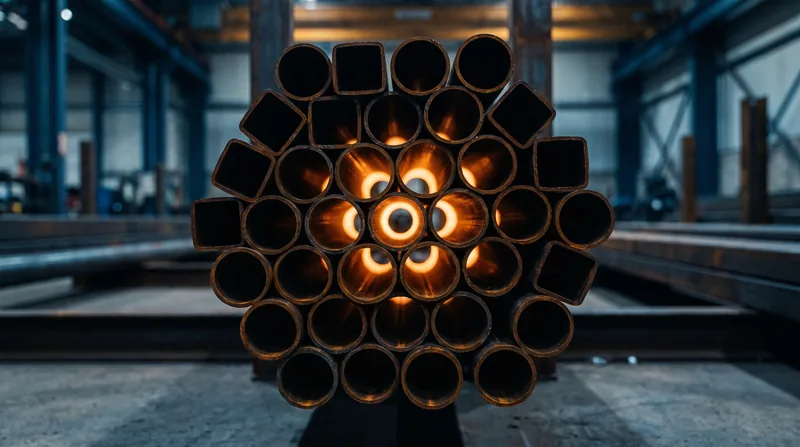
The batch is checked against the order at the mill before shipment: sizes, markings, heat numbers on the certificate and tags, packing
Documents
01
Heat number, chemical composition, mechanical properties and standard for every heat in the batch.
02
Measurements, markings, packing, weighing and bundle numbers, drawn up at the mill before shipment.
03
Items, sizes, quantities and mass by bundle: what the warehouse acceptance is checked against.
04
Confirms the mill and country of manufacture for customs clearance.
DN 15–100 · black and galvanized · GOST 3262
Water and gas pipe to GOST 3262 for water, gas and heating. Nominal bore 15–100, light, standard, heavy
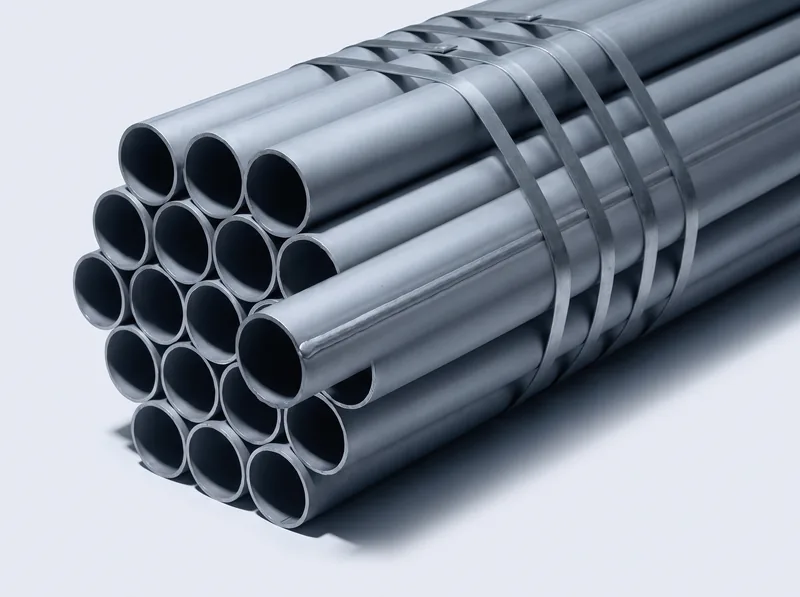
St3sp · Q235B · Ø57–530 · GOST 10704
Round pipe from strip with a high-frequency weld. Structures, fencing, low-pressure water and gas
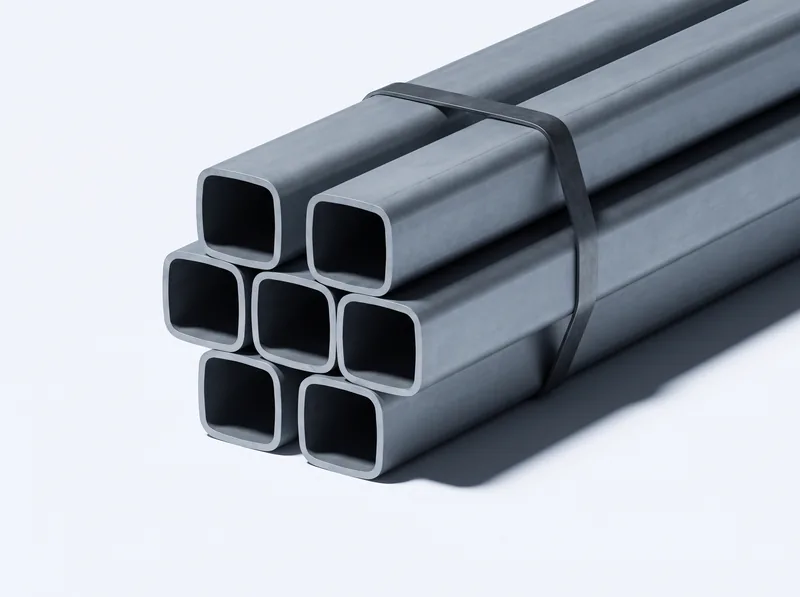
St3sp · 09G2S · 15×15–300×300 · GOST 8639 · GOST 30245
Closed square section for frames, trusses and fencing. Wall 1–12 mm, St3sp, 09G2S, Q235B, Q355B
Price request
Price depends on grade, size, tonnage and delivery terms on the day of contract.
Request received
This site keeps only your chosen language, the specification list, your sound choice and a note of this notice in your browser. There are no third-party counters or advertising cookies. Cookies