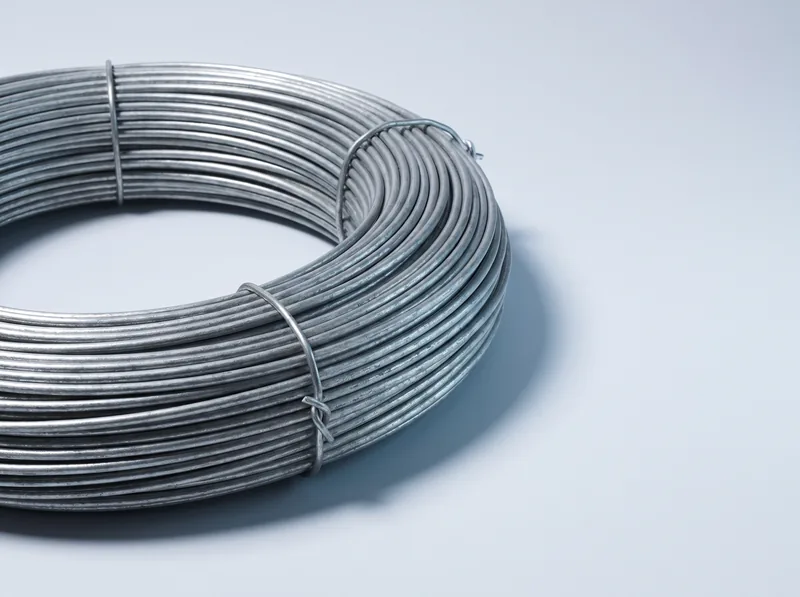
1Ts · 2Ts · Ø0.5–6.0 · GOST 3282 · ASTM A641
Galvanized wire
Low-carbon wire 0.5–6 mm with zinc coating for outdoor work and fencing
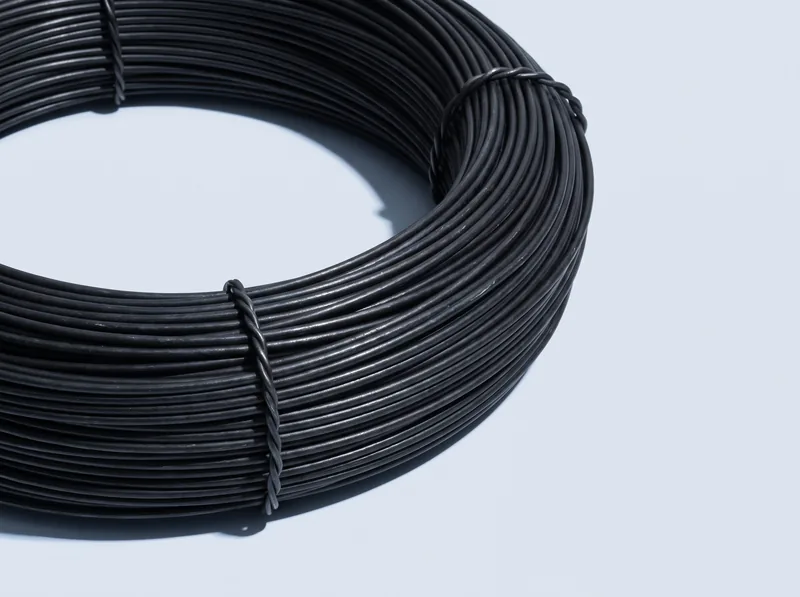
O · Ø0.8–4.0 · St1kp–St3 · GOST 3282
Soft heat-treated wire 0.8–4 mm for tying reinforcement cages and mesh
Pick a size in the table: each row has a quantity field in tonnes and an “Add to specification” button. Rows from several items go out as one request.
The same formula as the table below: metres to tonnes and tonnes to metres.
Formula
| Ø, mm | Weight, kg/m | Metres per tonne | Add to specification |
|---|---|---|---|
| 0.8 | Weight, kg/m0.004 | Metres per tonne253 431 | Add to specification |
| 1 | Weight, kg/m0.006 | Metres per tonne162 196 | Add to specification |
| 1.2 | Weight, kg/m0.009 | Metres per tonne112 636 | Add to specification |
| 1.4 | Weight, kg/m0.012 | Metres per tonne82 753 | Add to specification |
| 1.6 | Weight, kg/m0.016 | Metres per tonne63 358 | Add to specification |
| 2 | Weight, kg/m0.025 | Metres per tonne40 549 | Add to specification |
| 2.5 | Weight, kg/m0.039 | Metres per tonne25 951 | Add to specification |
| 3 | Weight, kg/m0.055 | Metres per tonne18 022 | Add to specification |
| 4 | Weight, kg/m0.099 | Metres per tonne10 137 | Add to specification |
Wire mass per metre is 0.006165·d², where d is the diameter in mm.
Theoretical weight at steel density 7.85 g/cm³. Actual batch weight is by scale and mill certificate.
Tying wire is general-purpose low-carbon wire to GOST 3282-74 in the heat-treated condition (O). It is drawn from 5.5–6.5 mm wire rod of grades St1kp, St2kp, St3 to GOST 380 or Q195, Q235 to GB/T 700, then annealed in bell furnaces without access of air: work hardening is removed, the wire becomes soft and bends without springing back. By surface it is either black (Ch), with annealing scale, or bright (S), annealed in a protective atmosphere.
The difference between grades comes down to carbon content: St1kp and Q195 give soft wire with lower tensile strength, St3 and Q235 are stiffer. For annealed wire GOST 3282 specifies tensile strength and elongation; for non-heat-treated wire, tensile strength only. For tying cages by hand and with a hook, 1.2–1.6 mm is used; for tying tools, 0.8–1.0 mm spools; for strapping bundles and formwork, 2.0–4.0 mm.
During inspection at the mill the bureau measures the diameter with a micrometer in two perpendicular directions on coils from different parts of the batch and checks ovality within the GOST 3282 tolerance, bends samples through reverse bends and checks for cracks, laps and loose scale. The mill test certificate (MTC) is checked against the wire rod heat number, chemical composition and test results; each coil is checked for a tag with diameter, grade and heat, and the packaging for protection from moisture in transit.
Coils tied with wire in three places, covered with film or paper and stacked on pallets; coil and spool weight is agreed in the specification. Each coil carries a mill tag with diameter, steel grade and heat.
Equivalents are the nearest, not identical: the exact grade and standard are written into the contract.
| GOST | GB (China) | ASTM | EN | Note |
|---|---|---|---|---|
| St1kp (GOST 380) | GB (China)Q195 | ASTMAISI 1006 | ENC4D (EN 10016-2) | NoteNearest equivalent by carbon content; wire rod steel for soft tying wire |
| St2kp, St3kp (GOST 380) | GB (China)Q215, Q235 | ASTMAISI 1008 | ENC7D (EN 10016-2) | NoteNearest equivalent; for galvanized wire and chain-link mesh. Q235 is stiffer than St2kp; the grade is fixed in the specification |
| O wire (annealed, GOST 3282) | GB (China)退火钢丝 (GB/T 343) | ASTMASTM A853 annealed | ENEN 10218-2 | NoteEquivalence by delivery condition, not by steel grade: EN 10218-2 sets only diameter tolerances |
| 1Ts, 2Ts (GOST 3282) | GB (China)热镀锌 / 电镀锌 (GB/T 343) | ASTMASTM A641 Class 1, Class 3 | ENEN 10244-2 class A–D | NoteClasses are defined by zinc weight per m² and do not match directly; the specification states the coating weight in g/m² |
| VR-1 (GOST 6727) | GB (China)CRB550 (GB/T 13788) | ASTMASTM A1064 D-wire | ENB500A (EN 10080) | NoteNearest equivalent: VR-1 is cold-drawn with indentations, CRB550 is cold-rolled ribbed; strength is close, the profile differs |
| A500C (GOST 34028) | GB (China)HRB400E, HRB500E | ASTMGrade 60 (ASTM A615) | ENB500B (EN 10080) | NoteNearest equivalent by yield strength is HRB500E (500 N/mm²); HRB400E is lower (400 N/mm²); for reinforcing mesh the specification states the class to GOST 34028 and the grade to GB/T 1499.2 |
Equivalents are the closest match, not identical: chemistry and tolerances differ between standards. The exact grade and standard are written into the contract.
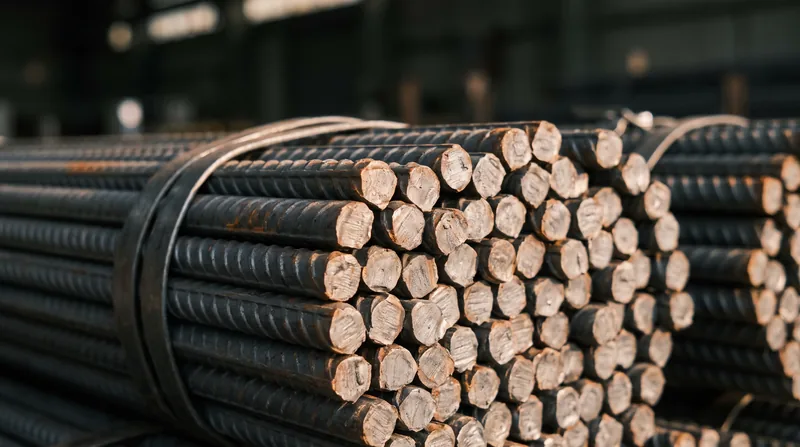
The batch is checked against the order at the mill before shipment: sizes, markings, heat numbers on the certificate and tags, packing
Documents
01
Heat number, chemical composition, mechanical properties and standard for every heat in the batch.
02
Measurements, markings, packing, weighing and bundle numbers, drawn up at the mill before shipment.
03
Items, sizes, quantities and mass by bundle: what the warehouse acceptance is checked against.
04
Confirms the mill and country of manufacture for customs clearance.
1Ts · 2Ts · Ø0.5–6.0 · GOST 3282 · ASTM A641
Low-carbon wire 0.5–6 mm with zinc coating for outdoor work and fencing
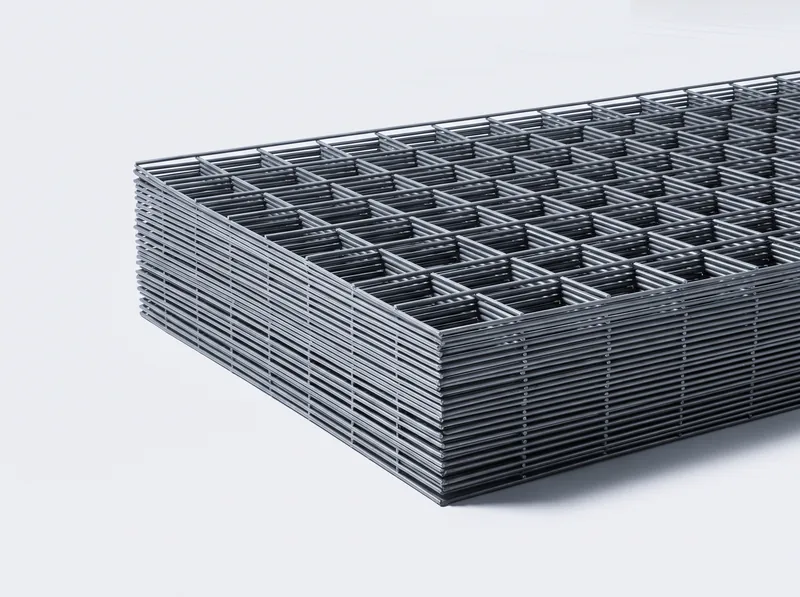
VR-1 · Ø3–6 · 50×50–200×200 · GOST 8478 · GOST 23279
Mesh of 3–6 mm cold-drawn wire with 50–200 mm openings in sheets and rolls
Price request
Price depends on grade, size, tonnage and delivery terms on the day of contract.
Request received
This site keeps only your chosen language, the specification list, your sound choice and a note of this notice in your browser. There are no third-party counters or advertising cookies. Cookies