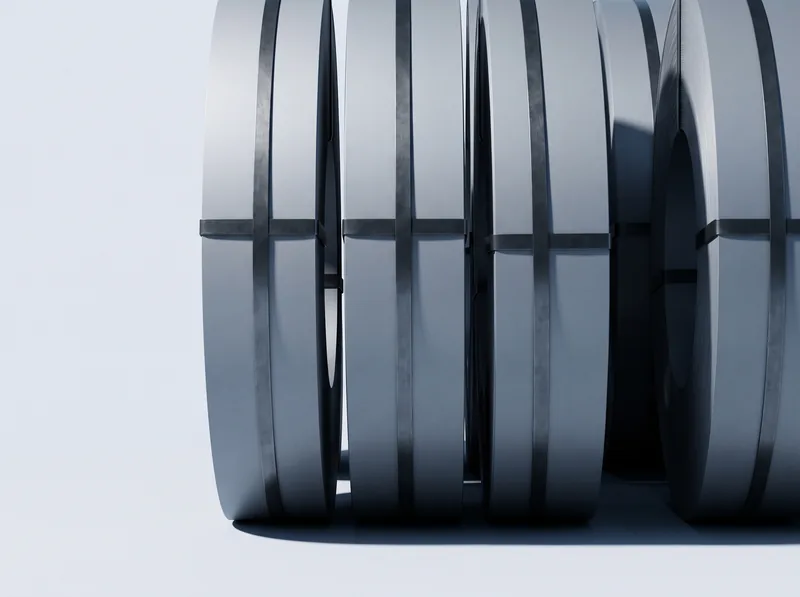
St3sp · Q235B · DC01 · 0.5–6 mm · width 20–630 · GOST 6009
Slit strip
Strip slit lengthwise from coil, 20–630 mm wide and 0.5–6 mm thick, for electric-welded tube, profiles and banding
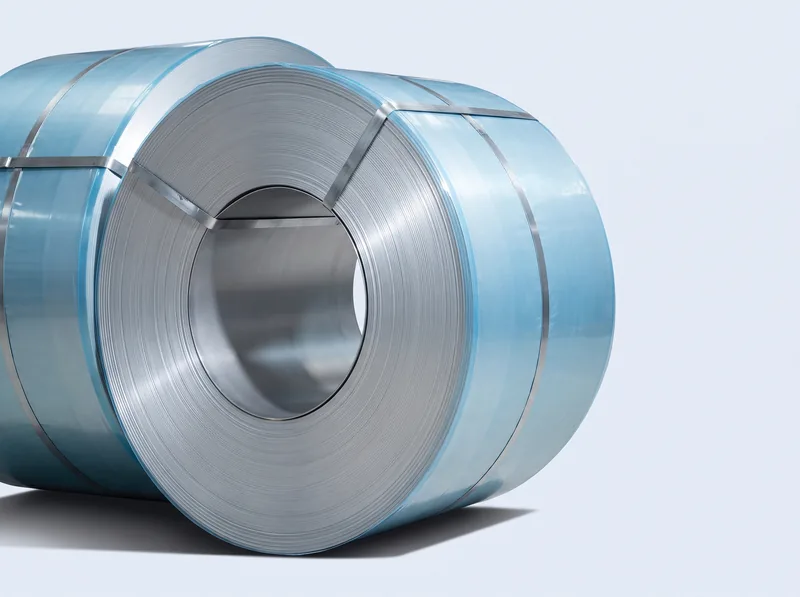
201 · 304 · 316L · 2B · BA · 0.3–3 mm · ASTM A240
Cold-rolled stainless coil in grades 201, 304, 304L and 316L with a 2B or BA finish, 0.3–3 mm thick
Pick a size in the table: each row has a quantity field in tonnes and an “Add to specification” button. Rows from several items go out as one request.
The same formula as the table below: metres to tonnes and tonnes to metres.
Formula
| t, mm | Weight, kg/m² | Sheet 1 500×6 000, kg | Add to specification |
|---|---|---|---|
| 0.3 | Weight, kg/m²2.35 | Sheet 1 500×6 000, kg21.2 | Add to specification |
| 0.4 | Weight, kg/m²3.14 | Sheet 1 500×6 000, kg28.3 | Add to specification |
| 0.5 | Weight, kg/m²3.92 | Sheet 1 500×6 000, kg35.3 | Add to specification |
| 0.6 | Weight, kg/m²4.71 | Sheet 1 500×6 000, kg42.4 | Add to specification |
| 0.8 | Weight, kg/m²6.28 | Sheet 1 500×6 000, kg56.5 | Add to specification |
| 1 | Weight, kg/m²7.85 | Sheet 1 500×6 000, kg70.6 | Add to specification |
| 1.2 | Weight, kg/m²9.42 | Sheet 1 500×6 000, kg84.8 | Add to specification |
| 1.5 | Weight, kg/m²11.8 | Sheet 1 500×6 000, kg106.0 | Add to specification |
| 2 | Weight, kg/m²15.7 | Sheet 1 500×6 000, kg141.3 | Add to specification |
| 2.5 | Weight, kg/m²19.6 | Sheet 1 500×6 000, kg176.6 | Add to specification |
| 3 | Weight, kg/m²23.5 | Sheet 1 500×6 000, kg211.9 | Add to specification |
Plate mass per m² is 7.85·t, where t is the thickness in mm; sheet mass is for the 1 500×6 000 mm format.
Theoretical weight at steel density 7.85 g/cm³. Actual batch weight is by scale and mill certificate.
Stainless coil is cold-rolled strip of corrosion-resistant steel that after rolling has been bright annealed or annealed and pickled, then skin-passed. The 2B finish is matt silver after pickling and skin-passing, the base finish for industrial equipment; BA is mirror-like after bright annealing in a protective atmosphere, for decorative and food-contact surfaces. Hot-rolled coil 3–8 mm thick is supplied with a No.1 finish to specification. The surface is covered with protective film.
The grades differ in composition and resistance. 304 (06Cr19Ni10, 08Kh18N10) is the base chromium-nickel austenitic steel for food, chemical and household equipment; 304L has reduced carbon, for welded structures without subsequent heat treatment. 316L (022Cr17Ni12Mo2, 03Kh17N14M3) contains molybdenum and withstands chloride and acidic media. 201 (12Cr17Mn6Ni5N) is chromium-manganese steel in which nickel is partly replaced by manganese and nitrogen: suitable for decorative and indoor uses, with lower corrosion resistance than 304. Mills in China roll to GB/T 3280; export batches are certified to ASTM A240 and EN 10088-2.
Inspection at the mill before shipment: the grade on the outer wrap with a positive material identification (PMI) analyser by chromium, nickel and molybdenum content — substitution of 201 for 304 is detected only this way; thickness with a micrometer at the edges and in the middle of the width; width with a tape; uniformity of the 2B or BA finish, absence of scratches, rolled-in particles and stains under the film. The mill test certificate (MTC) is checked against the heat number on the tag: grade, chemical composition, yield strength, tensile strength, elongation, hardness. Marking on the film, the wrapping and the strapping are checked. The weight in the calculated table below is at a density of 7.85 g/cm³; for austenitic grades the design density is higher (7.93 for 304, 7.98 for 316L per the ASTM A480 table), and tonnage is taken by weighing.
The surface is covered with protective film; the coil is wrapped in moisture-proof paper, the end faces are closed with rings, strapped with steel band around the circumference and through the eye; mill tag with heat number, grade, finish, thickness, width and weight.
Equivalents are the nearest, not identical: the exact grade and standard are written into the contract.
| GOST | GB (China) | ASTM | EN | Note |
|---|---|---|---|---|
| St3sp | GB (China)Q235B | ASTMA1011 CS Type B / A36 | ENS235JR | NoteCorrespondence by mechanical properties; the chemical composition and impact toughness requirements differ between the standards — check against the MTC. |
| 09G2S | GB (China)Q355B (Q345B) | ASTMA572 Grade 50 | ENS355JR | NoteNearest analogue: yield strength is comparable, but 09G2S carries more manganese and silicon alloying. |
| 08ps | GB (China)DC01 / SPCC | ASTMA1008 CS Type B | ENDC01 | NoteCold-rolled low-carbon steel for general use; deep drawing calls for DC03–DC04 or 08Yu. |
| 08ps ZN (GOST 14918) | GB (China)DX51D+Z | ASTMA653 CS Type B | ENDX51D+Z | NoteGalvanized base for bending and roll forming; the zinc class is specified separately (Z100–Z275). |
| 250 / 350 (GOST 14918) | GB (China)S250GD+Z / S350GD+Z | ASTMA653 SS Grade 37 / 50 | ENS250GD+Z / S350GD+Z | NoteStructural galvanized grades with a specified yield strength; ASTM SS is the nearest analogue by strength. |
| 08Kh18N10 | GB (China)06Cr19Ni10 | ASTM304 | EN1.4301 | NoteAustenitic chromium-nickel steel; the GOST grade allows a higher carbon content than 304L. |
| 03Kh17N14M3 | GB (China)022Cr17Ni12Mo2 | ASTM316L | EN1.4404 | NoteMolybdenum-bearing low-carbon austenitic steel; close correspondence. |
| 12Kh17G9AN4 | GB (China)12Cr17Mn6Ni5N | ASTM201 | EN1.4372 | NoteNearest analogue: chromium-manganese steel with nitrogen, nickel partly replaced by manganese; corrosion resistance is lower than that of 304. |
Equivalents are the closest match, not identical: chemistry and tolerances differ between standards. The exact grade and standard are written into the contract.
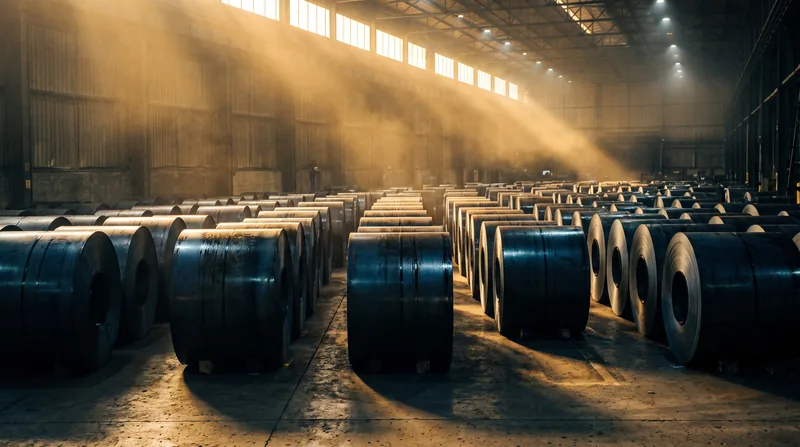
The batch is checked against the order at the mill before shipment: sizes, markings, heat numbers on the certificate and tags, packing
Documents
01
Heat number, chemical composition, mechanical properties and standard for every heat in the batch.
02
Measurements, markings, packing, weighing and bundle numbers, drawn up at the mill before shipment.
03
Items, sizes, quantities and mass by bundle: what the warehouse acceptance is checked against.
04
Confirms the mill and country of manufacture for customs clearance.
St3sp · Q235B · DC01 · 0.5–6 mm · width 20–630 · GOST 6009
Strip slit lengthwise from coil, 20–630 mm wide and 0.5–6 mm thick, for electric-welded tube, profiles and banding
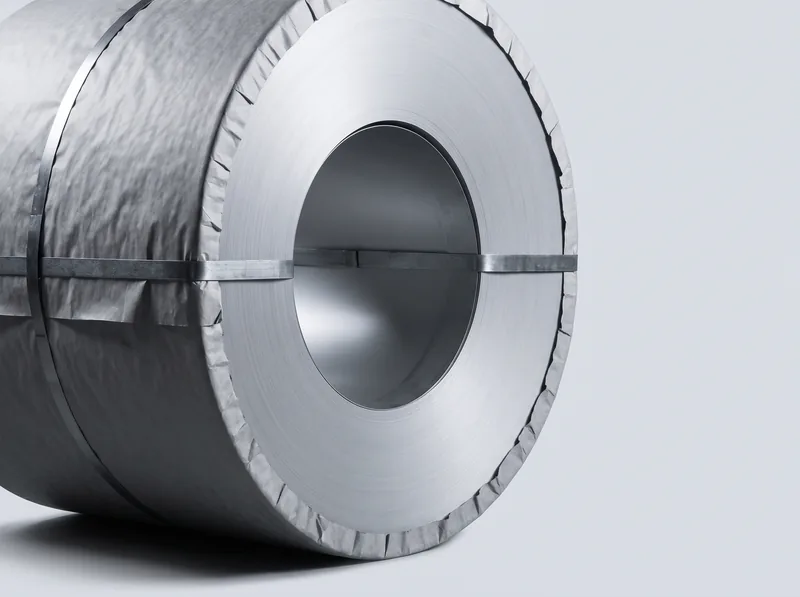
DC01 · 08ps · SPCC · 0.4–3 mm · width 1 000–1 500 · GOST 19904
Cold-rolled annealed coil in DC01, 08ps and SPCC, 0.4–3 mm thick, for pressing, painting and galvanizing
Price request
Price depends on grade, size, tonnage and delivery terms on the day of contract.
Request received
This site keeps only your chosen language, the specification list, your sound choice and a note of this notice in your browser. There are no third-party counters or advertising cookies. Cookies